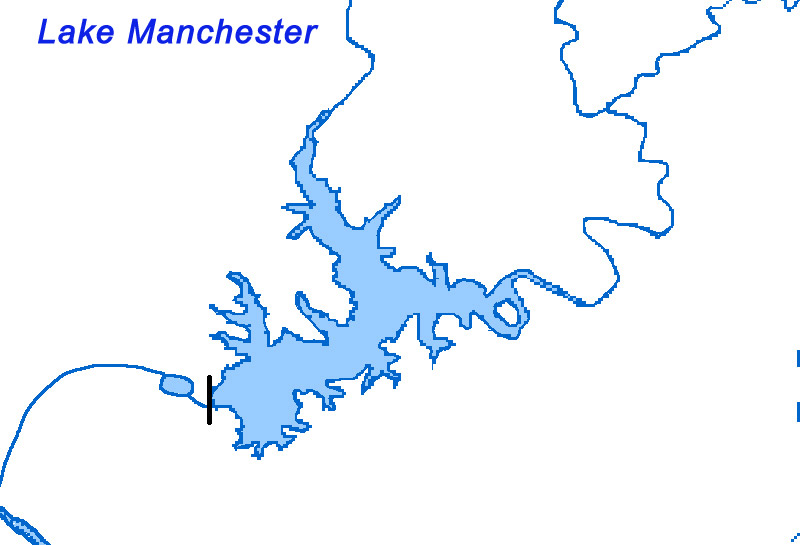
Lake
Manchester is built on Cabbage Tree Creek not far above
its confluence with the Brisbane River. Construction of
the Lake Manchester Dam commenced in 1912 and was competed
in 1916. It was originally called Cabbage Tree Creek Dam.
It was renamed in December 1916 when the new dam was names
after Mr E.J. Manchester, president of the Metropolitan
Water Supply and Sewerage Board.
In 1913 a water reserve was proclaimed restricting access
to the Lake Manchester Catchment Area. This prevented
the grazing of animals and the felling of trees. This
restriction was observed, except for a time in the1930s,
when limited logging took place.
When
Lake Manchester was constructed a sawmill was established
to process the felled timber. A house was built for the
Supervisor, Edwin Corlass, and this later became the caretaker’s
home. A postal receiving office was established at the
Cabbage Tree Reserve at the Lake Manchester Construction
site between 1913 and 1916. In 1999 Lake Manchester became
part of the Brisbane City Council area.
The
Lake Manchester catchment is one of the last remaining
pockets where the endangered plant Native Jute (Corchorus
cunninghamii) can still be found.
There
has never been any official stocking of fish into Lake
Manchester. However there is a resident population of
goldfish present. Small native fishes such as firetails
gudgeons are present & long finned eels have no trouble
negotiating the spillway to get into the lake. At times
litterally millions of elvers can be picked up by hand
at the swimming hole below the dam wall.
Queensland Lungfish are also reported to be present after
being introduced to the Brisbane system in the late 1800s
however due to limited access to the lake there have been
no reports for some years.
In recent times there have been applications to open the
lake so limited boating however these have been declined
by the Brisbaner Forrest Park Authority.
Lake Manchester's feeder creeks come from relatively high
altitudes and run cold year round. This is possibly one
of the few locations in Qld where River Blackfish and
trout could readily survive. The release of these fish
here would be regarded as illegal nowadays.
Access
to the lake is resticted to boating however anglers are
free to access the full perimeter of the lake by foot,
mountain bike or horse (horse riding by permit only).