SITUATED
18 kilometers from Emerald and almost on top of the tropic
of Capricorn line, Lake Maraboon is Queensland's second
largest lake.
It is 265 km west of Rockampton and 900km from Brisbane.
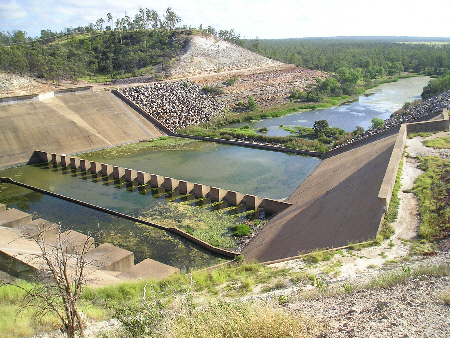
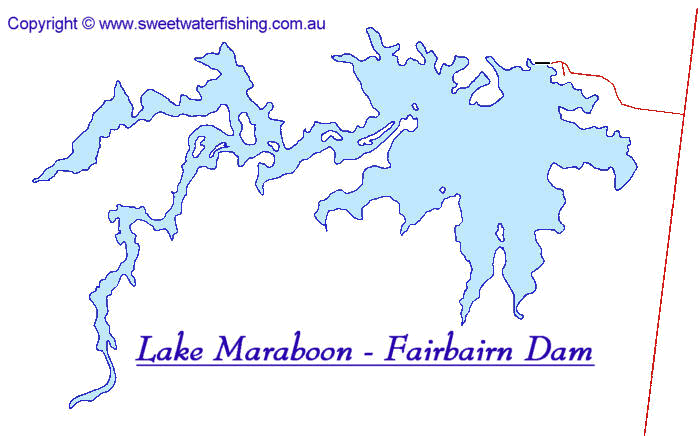
At a massive 15000 hectares surface area when full and
holding 1.3 million megalitres of water, the Fairbairn
Dam was constructed in 1972 across the Nagoa River "Gap"
creating Lake Maraboon (Aboriginal for "where the
black ducks fly") The Nogoa's sister rivers include
the Dawson, Comet, Don, Isaac, Connors and Mackenzie Rivers
that form the Fitzroy River system of Central Queensland.
Built primarily to service the Emerald Irrigation Scheme,
which produces some 25% of Queensland's cotton as well
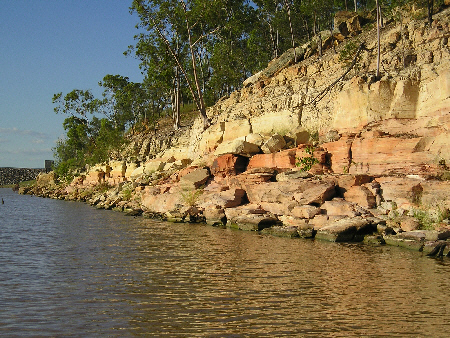
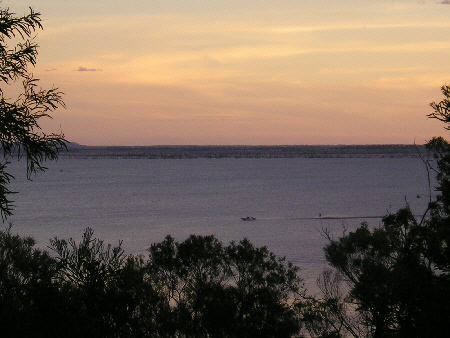
as large areas of citrus. The lake is dominated by masses
of standing timber, steep rocky banks and broad areas
of submerged flat country from the main basin right to
the headwaters. This makes for ideal fish habitat but
requires a firm hand on the tiller when navigating at
anything more than a troll in some areas.
History
The first European to explore the region was German born
Ludwig Leichardt whom travel from Brisbane to the Cobourg
Peninsula in the Northern Territory passing just west
of the Nogoa and Claude Rivers which feed Lake Maraboon.
While passing just to the west Leichardt noted a comet
in the sky (Haley's) and named the Comet River after it.
He described the area as having rich black soil similar
to the Darling Downs region.
After Leichhardt's glowing reports on the fertility of
the region, land was taken up and in 1860 one of the local
properties was named 'Emerald Downs' by the area's first
settler P. F. MacDonald who was impressed with the lush
greenness of the district after rain.
Facilities
Accommodation is available at the Lake Maraboon Holiday
Village that enjoys a great view over the lake with close
access to boat launching and picnic areas. Powered and
unpowered sites for camping and caravans are provided
and there are several modern self contained, air-conditioned
cabins for those who prefer a bit of comfort.
A large camp kitchen is there for guests to use with gas
bar-b-ques. A swimming pool and top class restaurant make
this an ideal location for an extended holiday or a short
stop over on long trips. Native wildlife pops up everywhere
with wallabies and possums coming into the camp ground
at night to feed on grass and the odd scrap of food they
may find. Food, fuel, bait, tackle, ice are all available
along with some friendly advice.
Alternate hotel & motel style accomodation is available
nearby in Emerald. See the Accommodation
page for details.
Adjacent to the holiday village is a large picnic area
with wood bar-b-ques, shady trees, tables and swings.
It is popular among Emerald locals on weekends. Immediately
below is the concrete launching ramp with plenty of parking
available there and along the bank. It can become quite
busy at times with skiing being a popular past time in
the area. The bank along side the launching is quite firm
with many boaties simply put in here & leave their
cars and trailers on the edge of the water.
Fishing
Lake Maraboon was first stocked in the late 1980's. Uniquely,
this is virtually the only location where Murray Cod were
stocked on a large scale on Queensland's east coast. (81
000 from 1989 - 1992)
It is widely held that they have established a breeding
population in the Nogoa River upstream of the lake and
while no cod have been stocked since 1992 the occasional
fish is still caught here. When water levels have been
high for an extended period, cod captures along rocky
backs in the main basin increase as the fish move out
of the river into better feeding and ambush locations.
With recent changes in Fisheries Dept thinking, the stocking
of Murray cod would no longer be permitted.
While
saratoga should have been present in the Nogoa River prior
to the dam being constructed, 100 of them were stocked
and continue to breed. While not to optimal numbers the
saratoga have a preference for structure; plenty of that
here.
Fitzroy
strain yellowbelly were present prior to the dam being
constructed and continue to breed. These form the backbone
of Maraboon angling scene. Significant numbers are taken
in the upper reaches, mainly by locals in the know and
are willing to travel up to 40 and 50 kilometers upstream
in search of them.
Just
over 200 000 silver perch were stocked up to 1994. While
captures of smaller fish were common for several years
they are a rare capture now. Their close cousin the leathery
grunter are here in numbers. While never growing to anything
that is going to pull drag, they are a great source of
entertainment for kids fishing from the bank with a handline
and a packet of worms or prawns. Showing up on sounders
by the million it is these fish that could be a major
food source for future barramundi stocking.
Barramundi
stocking has been very poor here to date. Only 9000 fish
being stocked (at time of writting) in such a large body
of water makes crossing paths with one a rare occurrence.
By
far the most popular target here is the redclaw crayfish.
At any given time there are folks here from far and wide
just to go crayfishing; very few are disappointed.
Future
With the local fish stocking group being daunted by stocking
such a large water body with limited funds the option
to concentrate their efforts on weirs downstream has seen
stocking into this lake virtually cease.
With the inception of the Stocked Impoundment Permit Scheme
on various Queensland impoundments in recent years and
the direct inflow of funds for restocking from the SIP,
Lake Maraboon could be back on the road to being a good
fishery if the decision was made to put Maraboon on the
scheme. Local councils should take note at other successful
barra lakes! Its got everything else going for it; structure,
food, space and is not as affected by wind as some coastal
lakes can be. It begs for some serious fish stocking to
turn this from a rarely heard of backwater, into one of
the best barra hotspots going, possibly rivaling the likes
of Awoonga, Tinaroo or even Peter Faust Dams.